


The first lines of the BEHA research project were written on the days between restrictions, controls, limits and masks. Five years ago, in 2021, we designed the “Cross-border proposal for knowledge of the Basque audience: an exercise to update the digital measurement of the communication space in Basque” from the Observatory together with Hekimena.
This first step was initiated under the call for Euroregional Citizenship projects (BEHATEGIA, 2021), which has been followed by two other projects developed in recent years with the support of the Euroregion: 2022-2023 “Composition and digital literacy of the joint traffic measurement panel on the Basque media websites” (BEHATEGIA, 2023/b) and 2024-2025 “Diagnosis and resources for the promotion of the data culture of the Basque media” (BEHATEGIA, 2024/b).
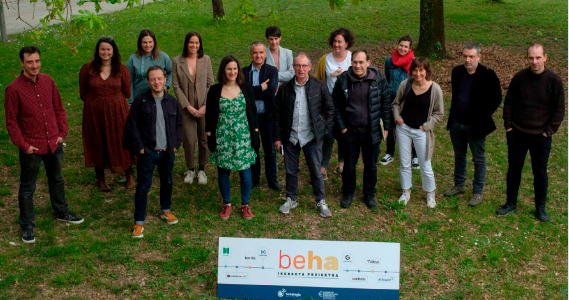
With the aim of supporting the Basque media in the era of digitalization, this line of work under the name of BEHA aims to open a shared window to the world of data and analytics.
We have developed two branches in parallel. On the one hand, since the web is usually the core of communication projects, with web analytics we began to explore the field of data. With a sample of eight media outlets (Alea, Anboto, Berria, Elhuyar, Euskalerria irratia, Gaztezulo, Hamaika, Kanaldude) we began to work on the qualitative diagnosis, then we made and agreed on a web measurement proposal to apply to the Basque media and finally we applied it to the sample. With the necessary adjustments and developments, the standard web measurement application was extended to 60 media outlets and, using Google Analytics for web analytics tracking, the new BEHA panel tool for web audience analysis was created. Subsequently, the movement from access to data to its use was activated, both through the development of literacy, training and the provision of various resources.
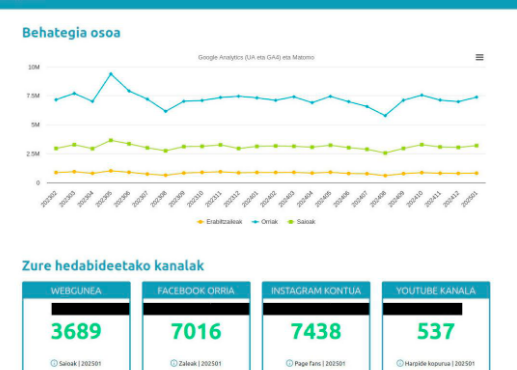
On the other hand, while working on web analytics, the challenge of looking at the digital environment as a whole was also raised. How to know what is happening throughout the activity of a media outlet? To answer this question, we have developed the new Observatory Analytics tool in collaboration between Observatory, Hekimen and CodeSyntax. It measures, in addition to traffic on websites, traffic on social networks and other digital media (e.g. newsletters). In addition, under the auspices of a mutually agreed agreement, each media outlet also has the possibility to compare its data with the rest of the media and analyze whether its trends coincide with those of others, in accordance with an open philosophy and taking steps in an exemplary practice of joint learning. It should also be noted that this tool is built on free software and, in this era of datafikation, performs a reappropriation of the data that is stored on third-party platforms on the network.
Halandaze, over the course of five years, several things have been achieved; here are some facts:
The requirements were detected in the first diagnosis made at the beginning of the research project (Mimenza–Castillo, 2023, p. 371) They have been largely answered.
- Need for advice and technical assistance: questions and requests from different media have been answered and answered from the Office of the Observatory, as well as the analysis for the media table constituted by the sector and the administration in the CAPV.
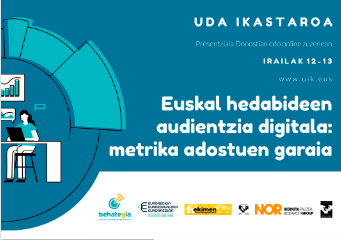
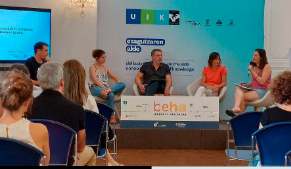
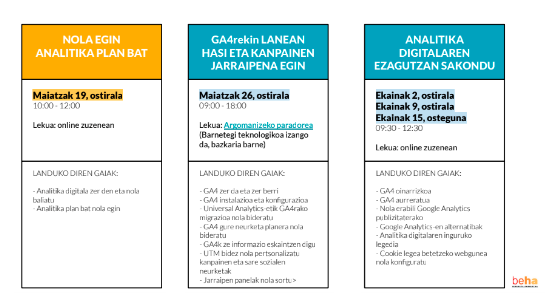
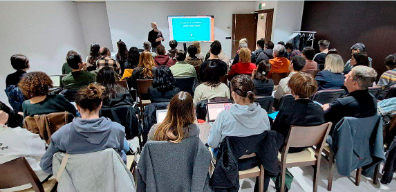
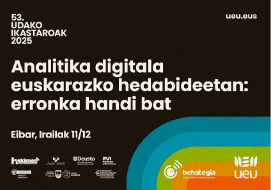
- Basic training: several training cycles have been organized around analytics, both face-to-face and online, web seminars on data culture have been developed (they are still available on the portal behategia.eus), summer courses have been held, etc.
- Simple data tracking panels: More than 60 BEHA panels have been created to allow each medium to follow up the analytics of its web project in Basque and in a simple way. In addition, the Observatories Analytics tool has been developed to work on the monitoring of the entire digital environment in an open and collaborative way.
- Guide for the development of measurement plans: before starting to work with data, the key lies in the questions that are posed previously, that is, in the correct definition of the measurement plan before going to the data. On this basis, the Basque media have also been offered the areas to be taken into account in the development of these plans, the questions to be answered by each communication project and the guide for the elaboration of the plan.
- Common group analysis: in addition to providing tools, training, advice and guides to help each of the media in their daily lives, individual interventions have been overcome and collective reflections and analysis have been worked on, most of which can be found in this and previous editions of this yearbook.
Access to data is often not a sufficient reason for its use, as was evident in the round of quantitative diagnoses carried out in the AHEB itinerary. Therefore, in the results of the second qualitative diagnosis, beyond the obstacles to the integration of digital analytics in work routines, such as lack of money, lack of time, ignorance, etc., a “positive spiral” was also detected and proposed (Martínez-Juez, 2025): to promote knowledge and reflection through external assistance > design plans > implement plans > immerse oneself in dynamics of continuous improvement.
At the beginning of the BEHA line of work, 20% of the Basque media said they did not know “anything” about digital analytics and only 4% said they knew “a lot”. After the last five years, there is no “zero” ignorance in the sector, and the percentage of those who know “a lot” has increased to 20%. In addition, almost all projects have or are in the process of being carried out with an analytical plan.
Well, quantitatively and qualitatively, something has changed, which has probably been helped by the work done in the evolution of this research project, and also by the fact that the media in Basque request measurement plans for audience knowledge in the applications prepared by the Basque Media Board formed with the institutions of the CAV for the call for grants in 2025.
This is a fruitful journey so far, but there are plans that we have not come to work on, such as updating the BEHA panels with more personalized standard configurations, creating a panel to follow the audience of the network in real time, developing panels also for projects that are using Matomo for web analytics, or performing more in-depth analyses of the analytics of the network to get closer to know the total and potential audiences.
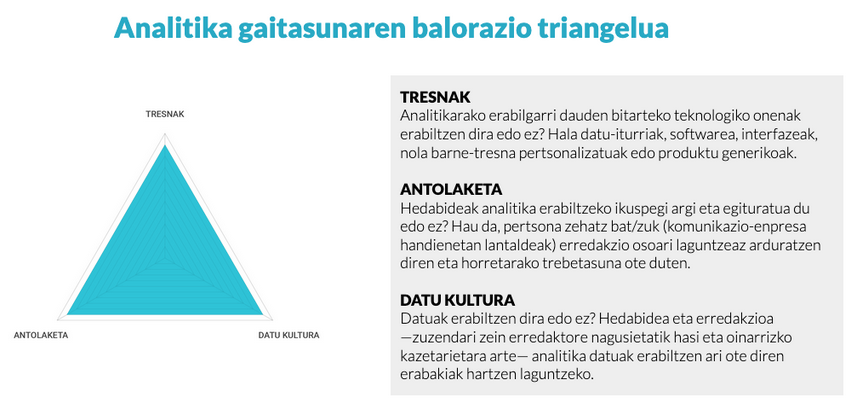
Likewise, the sector’s advanced full analytical capacity has not been achieved. However, significant progress has been made at the three vertices of the analytical capacity assessment triangle proposed by Cherubini and Nielsen (2016).
Two decisive movements have occurred in the last five years: we have begun to talk about digital analytics among the Basque media, and we have also begun to ask questions about the data.
Analytics is data in digital environments (websites, applications, social networks, online advertising campaigns, etc.) quantitative and qualitative information on the behavior of the users, customers or audiences that are collected, that is, data collected for the purpose of measurement, understanding and optimization. Highs can also be defined as the basis of digital existence (and in some cases survival).
We have transformed the initial restrictions, limits, controls and masks, although with new uncertainties, into data restrictions, data limits, data controls and data masks. In this way, the cycle of the BEHA project has been completed and now, as it passes, the new spiral will be designed by what the Basque media wants and needs.
-----------------------------------------------------------------------------------------------------------------------------------

Analytics Digi... what?
Yeah, that"s how we took it when we first heard it. That we had to know the digital anatomy
of our readers: where they come from, who they are, what they come to On the table we were asked a thousand
questions, which made us feel the need to answer and, the most difficult, to make decisions of the size
.
Every novelty comes with mistrust under the arm. To the backpack of challenges that these small media in the Basque Country
currently have, we have been introduced,
a great stone in addition to the efforts and headaches that we must invest in those working hours that we cannot get out of.
Unfortunately, or fortunately, we are forced to dance in the wave of novelty and,
in this way, digital analytics has a role for the media.
We began our journey by the hand of the watchtower. Without understanding much at first, but
taking time out and taking small steps, it has become part of
our work process. We also analyze the current news, marketing plan or advertising sales from digital analytics
: through this system
you can analyze the analysis of the most read news, the impact
and scope of a campaign, the efficiency of a web banner, etc.
The data does not provide the keys, but it allows us to find trends. First, you have to ask what
questions you want to be answered. Once the most difficult exercise is completed, determining which
data should be collected and starting to collect them, the collection of the data will give the answers,
as well as the errors. No one knows which way to climb this mountain, but the need to start the path
is clear.
At a time when speed and disinformation
are rewarded in the digital world, digital analytics gives us
the opportunity to reflect on our actions. Whether it’s a good decision or a bad one, it captures the digital impact of our work
on a day-to-day basis and leads us to act on the next strategy, influencing continuous
improvement.
The offer initially taken from fear has become a new culture in our small media
. Despite the difficulties, having
measuring devices that measure our project is key in the review and elaboration of the strategy. Digital analytics will allow us to know the digital world
, if there is ever a chance to really know
the digital world
Naike Usabiaga
Irutxuloko Hitza

For the media, knowing our audience data is essential, and the Observatory
and the tools it has made available to us in recent years – the BEHA Observatory Panel
and Observatory Analytics – have helped us to draw attention to this. We have
always looked at the data, usually on a monthly basis. There was a time when we only gave them a glimpse
and little more, but in the last two years we have been studying the data more carefully
, because we have become aware that as we delve into them we can get to know our
readers, viewers and users better.
We are currently waiting for the third day of the month to arrive to consult the panels
of the Observatory and analyze the audience data of the previous month. Since we have six websites,
we compile a report with the main indicators of each website and disseminate them to the entire working group
. We send them to journalists, commercials, colleagues in the promotion and
administration, all of us, because we all need to know where
we are. These are basic data: number of users, sessions,
page views, visits from social networks, most read news...
Its objective is that we all take them into account and begin to give them relevance,
that is, to create a data culture in the work team.
We know that in the coming months and years we will have to give much more importance
to our audience data and our audience data. Our aim is to integrate the data we receive
into our organizational model in an automatic way,
that the data is part of our organizational model, and to start making decisions based on the data
, as well as strategic decisions. Knowing our audience in the best possible way
will be key when refining our offer, and although we are not yet very clear about how we are going to do it
, we are putting in place mechanisms
to surround as much data as possible, most of them in collaboration with Behstrategia!
Aitziber Arzallus
GUKA
References
OBSERVATORY. (S. D). Webinars. Viewpoint. Berreskuratua 2026(e)ko otsailaaren 6(e)an, hemendik: https://behategia.eus/eu/web-mintegiak/
OBSERVATORY. (2021, September 29). The BEHA research line is underway thanks to the call for projects “Citizenship of the Euroregion” 2021. Viewpoint. https://behategia.eus/eu/beha-ikerlerroa-abian-euroeskualdeko-hiritartasuna-2021ko-proiektu-deialdiari-esker/
OBSERVATORY. (2022/A, 19 March). The BEHA Research Project is already halfway there. Viewpoint. https://behategia.eus/eu/beha-ikerketa-proiektuak-bidearen-erdia-egin-du-dagoeneko/
OBSERVATORY. (2022/B, 1 July). Summer course: Measurement of digital audiences. Viewpoint. https://behategia.eus/eu/udako-ikastaroa-audientzia-digitalen-neurketa/
OBSERVATORY. (2022/C, 19 September). We are consolidating common bases for measuring the digital audience. Viewpoint. https://behategia.eus/eu/audientzia-digitala-neurtzeko-oinarri-bateratuak-finkatzen-ari-gara/
OBSERVATORY. (2023/A, 29 May). 28 In training sessions on digital media analytics. Viewpoint. https://behategia.eus/eu/28-hedabide-analitika-digitalari-buruzko-formakuntza-saioetan/
OBSERVATORY. (2023/B, 6 July). The media has moved to Google Analytics 4. Viewpoint. https://behategia.eus/eu/hedabideak-google-analytics-4ra-igaro-dira/
OBSERVATORY. (2024/A, 16 April). Consultancy work in digital analytics for media. Viewpoint. https://behategia.eus/eu/komunikabideentzako-analitika-digitaleko-kontsultoria-lanak/
OBSERVATORY. (2024/B, 5 July). The BEHA 3.0 project has been approved. Viewpoint. https://behategia.eus/eu/beha-3-0-proiektua-onartu-digute/
OBSERVATORY. (2025/A, 25 February). The new tool for measuring the digital audience of media is in the process of being launched. Viewpoint. https://behategia.eus/eu/hedabideen-audientzia-digitala-neurtzeko-tresna-berria-abiatze-prozesuan-dago/
OBSERVATORY. (2025/B, 16 May). A full-day program to help the media complete the analytics plan. Viewpoint. https://behategia.eus/eu/hedabideei-analitika-plana-osatzen-laguntzeko-egun-osoko-saioa/
OBSERVATORY. (2025/C, 26 May). Registration for the summer course is open. Viewpoint. https://behategia.eus/eu/udako-ikastarorako-izen-ematea-zabalik/
OBSERVATORY. (2025/, September 18). The media has taken an important step in deepening the culture of data. Viewpoint. https://behategia.eus/eu/hedabideek-aurrerapauso-handia-eman-dute-datuaren-kulturan-sakontzeko-bidean/
Cherubini, F., & Nielsen, R. C. C. (2016). Editorial analytics: How news media are developing and using audience data and metrics (p. 46). Reuters Institute for the Study of Journalism. https://reutersinstitute.politics.ox.ac.uk/our-research/editorial-analytics-how-news-media-are-developing-and-using-audience-data-and-metrics
Martínez-Juez, A. (2025). The culture of data in the Basque media: A quantitative and qualitative analysis of the situation of the media in the Hekimena association. In H. Castro & L. Mimenza (Ed. ), Yearbook of Basque Media 2024-25 (pp. 71–84). OBSERVATORY. https://behategia.eus/eu/urtekaria_artikulua/9-2/
Mimenza - Castle, L. (2023). Analytics for measuring the digital environment of the Basque media: Diagnosis and proposal / Data analytics to measure the digital environment of Basque media: diagnosis and proposal [Doctoral thesis]. University of the Basque Country UPV/EHU. http://addi.ehu.eus/handle/10810/64075