
« Media consumption habits are changing. Living in the world of image and immersed in the digital revolution is opening a new world to employees and collaborators who make radio every day.That is why we have joined this first challenge [...] However, we cannot forget the basic characteristics of this medium and the need to guarantee our listeners the possibility of listening to the radio, everywhere and at any time of the day.” (Ximun Carrere, president of Euskal Irratia, 2025)
With these words began the presentation of Ximun Carrere, president of Euskal Irratia, on September 25, 2025, a day organized by Euskal Irratia to present the steps taken and the digital strategy developed in recent years.
The main challenge of Euskal Irratia has been to guarantee a quality radio in Basque and nearby in the French Basque Country, while adapting to the habits of digital consumption of content. And all this within the limits and conditions that we know, being free and independent local radio associations. In the following lines we present the solutions that we have detected in recent years for the future.
Rethinking the Euskal Irratia (Northern Basque Radio) network, facing challenges together and building a future through cooperation
Currently, Euskal Irratia brings together six radio stations: Gure Irratia (located in Uztaritz), Xiberoko Botza (located in Maule), Irulegi Irratia (located in Donibane Garazi), Amikuze Irratia (located in Donapaleu), Antxeta Irratia (located in Hendaia) and Euskal Irratia (the staff is distributed in the previous radios, with the main studio being the headquarters of Uztaritz).
Together, the network brings together 26 workers, of which 9 belong to the Euskal Irratia association, and has more than a hundred collaborators. Every day and without silencing the radio, the network offers news, chronicles, broadcasts, animations and music in Basque. according to the 2019 survey (VI Sociolinguistic Survey conducted by EEP, the Basque Government and the Government of Navarra), the network has 29,000 regular listeners and is the second most listened local radio in the Northern Basque Country. In terms of broadcasting, the network guarantees its presence through five FM broadcasts, three DAB+ broadcasts and five websites. It is also possible to follow the contents of each radio on social networks.
As a result of the reflection work carried out in recent years, the interpenetration of radio stations has been reorganized, giving shape to the current organizational model:
First, it is about guaranteeing radio and information in Basque, in the local Basque language, bringing it closer to as many citizens as possible, disseminating local and local news. This objective is followed by Antxeta Irratia, Gure Irratia, Xiberoko Botza, and the radios of Irulegi and Amikuze. The four associative radio stations have full autonomy, with an average of 3.3 employees (full-time) each to ensure local programming.
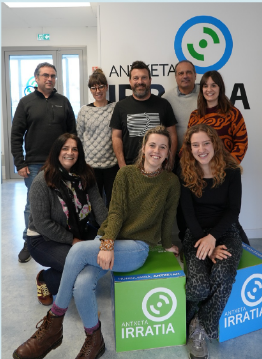
Secondly, it aims to guarantee radio and general information in Basque at the level of the French Basque Country, offering journalism and current affairs in Basque. To this end, a Editor-in-Chief and six full-time journalists are working within the Euskal Irratia group to follow the general news of the entire French Basque Country. In terms of production, 13 news items are guaranteed per day, which are broadcast by all the radios of the network. In addition, Euskal Irratia produces a common programming, a general grid, which local radios may or may not adopt depending on their programming.
Finally, the aim is to link local radio stations with the radio project in the Northern Basque Country, respecting the autonomy of each radio association, while building a shared governance within the Euskal Irratia association. To this end, radio exchanges are organized to enable collaboration, mutualisation and agreement on strategic directions. In this context, Euskal Irrati performs support functions for the entire network in the technical (technical), common programming (programming manager), digital strategy (digital manager) and management (director) areas.
The main challenges we face together in the face of the digital transition:
The new digital expansion of DAB+: territoriality, the place of the Basque language and the future of the Euskal Irratia network at stake
DAB+ (Digital Audio Broadcasting Plus) is the digital broadcasting system for radio. It is the successor of the FM, which is used to propagate the radio signal digitally. For listeners, more radio, better sound quality and additional information (titles, photos or names of speakers, information about music, etc. may appear written on the radio screen) it offers them. For radios, on the other hand, it is a new form of diffusion that reorganizes the entire radio landscape and will be essential in the future. It is similar to television DTT (Digital Terrestrial Television) but in radio. Since 2021, all new cars have an integrated OBD+ system. Some countries (such as Norway or Switzerland) have completely turned off the FM broadcast. France is heading in this direction, currently covering more than 50% of the population with the DAB+ network. since 2018, ARCOM (the French public body that manages the rules and broadcasting of radio, television and audiovisual media) has carried out the planning of DAB+ broadcasting. The state says that by 2030 most of the population and territory will be covered by DAB+.
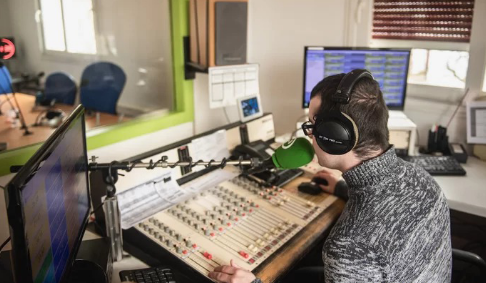
Radio stations in Basque want to join this movement from the first moment. After many years of collective and institutional work, since June 2023 we have also been expanding through DAB+. We have had to make technical adaptations, and we have to pay for the expansion itself, which involves a great and additional expense for the association. Euskal Irratia is located in the Baiona Zabaldua allotment (broadcast area defined by ARCOM, see Figure 1) and Gure Irratia and Antxeta Irratia in the local Baiona allotment (see Figure 2).
One such allotment or zone may comprise one or more multiplex. A multiplex brings together multiple radios over DAB+ on the same digital channel to broadcast together in the same broadcast área. In the French Basque Country, there are 13 radio stations in each rotation, which means a total of 26 radios (Basque and French), to which are added two Multiplex Métropolitains that are already in operation, composed of French state radios, and a total of 56 radios can be heard in the DAB+ broadcasting centers, the vast majority of which are not here and almost all in French, being able to listen to about 20 such radios through the FM. It goes from 20 to 56.
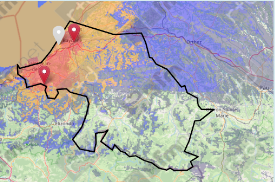
figure 1: Expanded Bayonne Allothetization (Basque Radios) – Red and orange Diffusion
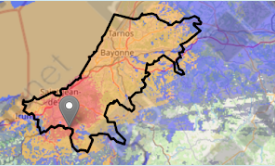
figure 2: Local Allotment of Bayonne (Antxeta Irratia and Gure Irratia) - Red and orange Diffusion
But for us, DAB+ is not only a technological advance: it also poses the question of where the Basque language will be in the radio landscape of tomorrow, and we have challenges in this regard.
“There is a mix of excitement and excitement about this new technology. Knowing the illusion and the need that the FM will be extinguished or that a migration will be carried out in the coming years ». (Jojo Bidart, President of Irulegi-Irratia and Secretary of Euskal Irratia, September 25, 2025).
In a first stage, the main work was to determine the territorial scope of DAB+ expansion. The objective was clear: To extend the scope of the Bayonne Extension to the entire Northern Basque Country, so that the scope of use of the Basque language and the needs of the public service in Basque were taken into account. Thanks to the institutional support, this request was transmitted to ARCOM and the request was accepted.
However, the expansion of DAB+ is currently limited to the coastal areas of Lapurdi and the interior is not yet covered. This situation is the result of the decision taken by the majority of the 13 radios grouped in the OPMUX of the Baiona Zabaldua allotment (OPMUX is the agent responsible for the technical management of the deployment of a multiplex in the DAB+ network). Since most of these radios are commercial, they have chosen to limit their broadcast to the areas with the highest audience concentration, especially to the coast and the interior of Lapurdi.
For us, it is important to spread it throughout the Northern Basque Country, so also in Baja Navarra and Xiberua: although the majority of the population is in Lapurdi (88% in Lapurdi, 12% in Baja Navarra and Xiberua), the difference is reduced if we take into account the proportion of Basque speakers (69% in Lapurdi, 31% in Baja Navarra and Xiberua) and is still smaller if we consider the audience of Euskal Irratia (58% in Lapurdi, 42% in Baja Navarra and 42% in Xiberua).
Another of the main concerns is that Xiberoko Botza and Irulegi Irratia are not yet digitally disseminated and have a very limited perspective. If ARCOM has mentioned the possibility of designating an allotment that would connect Xiberua with Amikuze, this would not include the regions of Baigorri, Garazi, Oztibarre, Arberoa and Hazparne, leaving them out of the game.
There are still other challenges that we are working on. To guarantee the presence of the Basque language in the radio landscape, being part of the processes and reflections that are currently underway.
The Euskal Irratia network, towards the development of content and digital presence
Radio stations are moving in parallel to another revolution, due to the change in the habits of use of the media and the growing digital presence. Three years ago, the radio stations of the network agreed on the same conclusion and objective: that we had to adapt the radios to the current society. That is why we set ourselves the objective of offering and reaching information in Basque and local to those who use digital content.
Although a number of issues are still in the process of reflection and development, in 2024–2025, a European grant has allowed us to take some steps to advance the digital project, in which a digital manager has been able to mobilise full-time. He has managed the general strategy, working on the development of new websites, the structuring of social networks, the management of internal organizational changes and the organization of training, whose results will be presented in the following points.
Beyond the development of digital tools, the digital strategy has led to changes in the function and internal organization of journalism to give digital space on websites, social networks and content production. As part of this, a comprehensive training plan was carried out in 2024–2025, providing employees with a first-class approach to image, video, assembly work, digital journalism and social media management.
Together we have developed and published the project of new websites in 2025.
“Each radio station had its own website, but there was a certain need to highlight the importance of the whole network also on that website [...] There is a lot of competition between the media, the big media are being centralized, we have opted for the network and in each territory we have opted to maintain the autonomy of each media. This website should have highlighted our uniqueness. In this case there are two peculiarities; giving priority to the Basque language and sound/audio, it places us in this competitive ecosystem, in the northern Basque Country, as a reference both in the field of local news and in the promotion of the Basque language.” (Inhar Iraizotz, Digital Manager in 2024-2025).
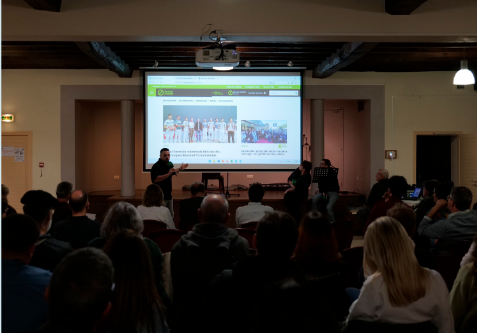
Following Inhar’s words, each Radio has developed its own website, maintaining its referentiality in the territory, but at the same time strengthening the network’s function through a unified digital platform, offering the possibility of centralizing content in a shared way. From the inside, this allows us to share content together, act in a collaborative logic and, consequently, strengthen our project.
We have developed projects to adapt our productions for social networks.
Each radio, according to its rhythm and capabilities, integrates social networks, image and video in its production. Videos, podcasts, new formats for social networks are worked on.
As part of this development, Euskal Irratia is working in collaboration with other media in Basque, creating specific content for social networks, recording and filming interviews and trying to adapt the contents heard on the radio to other digital media. Some examples of collaboration: With Kanaldude, Pensión podcast, sports chronicle filmed for social networks; with BADA, Gau pasa podcast, etc.
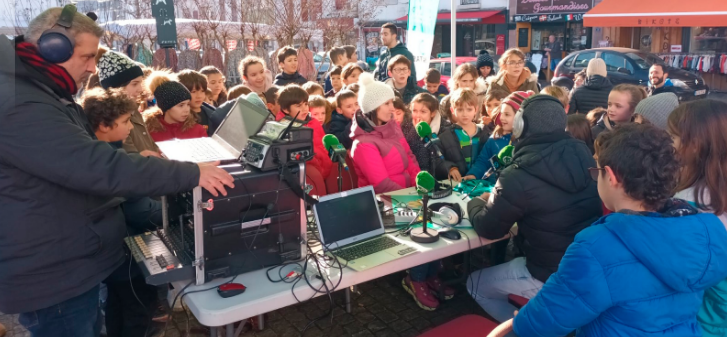
We create collaborative futures with the media in Basque
SAREBIDE: a new digital leap from collaboration.
Our digital development has taken a new stage with the SAREBIDE project. It is funded by the European grant POCTEFA and is carried out in collaboration with Berria, Kanala, Hamaika Telebista, Elhuyar and Euskalerria Irratia. The objective of the project is to accelerate the digital transformation of the media in Basque, on both sides of the border, strengthening cooperation and expanding the audience. To this end, the technological tools and capabilities of the six media will be updated, creating a common digital infrastructure for the exchange of content. At the same time, new tools will be developed to facilitate the distribution of audiovisual and musical content in Basque, as well as the use of artificial intelligence technologies to improve content management and enhance the user experience. SAREBIDE aims to strengthen the cross-border cooperation between Iparralde and Hego Euskal Herria, laying a solid foundation for the future and paving the way for a future in which the Basque language has a presence in the digital world.
As we said before, the Basque radio stations are still in a phase of reflection and development. Together with SAREBIDE, we continue to reflect on the place of radio in the digital world, the need to go beyond mere audio, the logic of creating and sharing content together, the evolution of the way workers work, the use of technology and artificial intelligence, etc.
Reflections of the Basque Media Association
These reflections for the future are also addressed within the Euskal Hedabideak Association (formed by five media in Basque from the French Basque Country: BERRIA, Herria, Kanaldude, Kazeta.eus and Euskal Irratia).
In the current difficult economic, political and sociolinguistic context, the Basque media share similar challenges: adapting to the digital transition, responding to the evolution of audiences and guaranteeing the presence of the Basque language. Added to these challenges are the economic difficulties faced by the associative media, exacerbated by cuts in public subsidies and increased costs. As for radio stations, since the last year there have also been threats of a sharp decline in state subsidies, and in 2025 we have already suffered a decline, further weakening our economic situation.
The media, although we play a role of general interest and public service, is undermining our model, endangering both daily production and future projects. In view of this, it is clear that the answer will not be able to be brought individually. Looking to the future, we think in a network, each with its own entity but in a collaborative way, and for this it is essential to guarantee a solid and sustainable public support that allows us to materialize and fund our projects.